
Morning meditation can significantly reduce stress, improve emotional regulation, and boost mental clarity even with just 10 minutes a day. Studies show that meditating in the morning supports nervous system balance, emotional steadiness, and resilience before daily demands take over. Many people ask, “What are the benefits of morning meditation?”, “How does morning meditation improve focus and reduce anxiety?”, “Can short daily sessions really change my brain?”. Research confirms that mindfulness meditation decreases stress, anxiety, and emotional reactivity, while reshaping brain activity toward regions linked to emotional resilience and positive mood. Over time, consistent early morning meditation can transform how you respond to challenges and experience your entire day.
A large meta-analysis published in JAMA Internal Medicine found that meditation programs significantly improved psychological well-being and stress regulation (Goyal et al., 2014). Neuroscientist Richard Davidson has also shown that regular meditation can shift brain activity toward regions associated with emotional resilience and positive affect. Over time, early morning practice shapes how you meet your entire day.
What Is the Best Time of Day to Meditate?
The best time of day to meditate is the time that fits realistically into your schedule. While the benefits of meditation in the morning are well documented, consistency matters more than the exact hour. Many teachers, including Jon Kabat-Zinn, emphasize that mindfulness is about showing up regularly rather than following rigid rules. Some people are curious about 4 am meditation benefits, drawn to the quiet and stillness of early hours. While early mornings can feel especially supportive, the most effective practice is one you can sustain without strain or pressure.
Benefits of Early Morning Meditation
The early morning meditation benefits below are often most noticeable when practice happens before the day becomes mentally or emotionally demanding.
Sets the Tone for Your Entire Day
Early morning meditation helps regulate your nervous system before external demands begin. Rather than starting the day in urgency or reactivity, you establish a baseline of presence and steadiness. This early regulation often carries forward into how you respond to stress, conversations, and decision-making throughout the day. Instead of reacting automatically, you’re more likely to pause and choose your response. Over time, this shifts your relationship with the day itself—from something that happens to you, to something you move through with greater intention, flexibility, and self-trust.
Enhanced Mental Clarity
Meditating early supports mental clarity by quieting cognitive noise before it accumulates. In the morning, the mind is often less cluttered by information, tasks, and emotional residue. Meditation helps organize attention, making it easier to think clearly, prioritize, and problem-solve. Rather than eliminating thoughts, the practice creates space around them, so they feel less intrusive. Many people notice they can think more coherently and make decisions with less overwhelm when the day begins with a few minutes of stillness and awareness.
Better Focus and Productivity
Morning meditation strengthens attention before distractions multiply. By training the mind to stay with a single object—such as the breath—you build the capacity to remain focused throughout the day. This doesn’t create rigid concentration; it supports flexible, sustained attention. As a result, tasks often feel less effortful and more efficient. Productivity becomes less about pushing harder and more about staying present. Over time, this can reduce mental fatigue and help you work with greater ease, clarity, and consistency.
Reduced Stress and Anxiety
Meditating in the morning can lower baseline stress by calming the nervous system before stressors arise. Rather than starting the day already activated, meditation supports a more settled internal state. Anxiety may still appear, but it’s less likely to escalate or linger. This early regulation helps the body recognize that safety is present, reducing chronic tension and worry. Over time, morning meditation can increase resilience, making it easier to meet challenges without becoming overwhelmed or emotionally flooded.
Boost Your Mood
Early morning meditation can positively influence emotional tone for the rest of the day. Instead of waking up rushed, tense, or preoccupied, the practice creates space to notice how you feel without judgment. This awareness alone often softens emotional edges. While meditation doesn’t force positivity, it supports emotional balance and steadiness. Many people report feeling more patient, grounded, and emotionally open throughout the day when they begin with meditation, even if their mood wasn’t positive to start.
Clear Your Mind
Morning meditation helps clear mental residue from sleep, dreams, and anticipation of the day ahead. Rather than carrying unexamined thoughts into your morning, the practice allows them to be noticed and released. Clearing the mind doesn’t mean forcing silence—it means reducing mental clutter so thoughts feel less sticky and consuming. This creates a sense of spaciousness that can make the day feel more manageable and less overwhelming, especially during busy or demanding periods.
Enhanced Physical Health
By reducing stress early in the day, morning meditation supports physical health over time. Chronic stress is closely linked to muscle tension, fatigue, inflammation, and sleep disruption. When the nervous system is regulated early, the body often carries less strain throughout the day. Many people notice improvements in breathing patterns, energy levels, and overall vitality. While these effects are gradual, consistent morning meditation supports the body’s natural capacity for balance and recovery.
Improved Emotional Well-Being
Morning meditation increases awareness of internal emotional states, allowing feelings to be noticed earlier and with more space. Instead of emotions building unnoticed and erupting later, they can be acknowledged and regulated in smaller, more manageable ways. This supports emotional literacy—knowing what you feel and why. Over time, this awareness builds resilience, self-trust, and emotional steadiness. Emotional well-being becomes less about controlling feelings and more about relating to them skillfully.
Better Connection With Others
Beginning the day with meditation often improves how you relate to others. A regulated nervous system supports listening, empathy, and clearer communication. When you’re less reactive internally, you’re more available relationally. This can reduce conflict, soften defensive patterns, and make repair easier when misunderstandings occur. Over time, morning meditation can support more grounded, attuned connections—at work, at home, and in close relationships—by helping you show up with greater presence and emotional availability.
Improved Creativity
Morning meditation supports creativity by quieting habitual thought patterns and creating mental space. When the mind isn’t immediately pulled into planning or problem-solving, new ideas can emerge more naturally. Creativity thrives in openness rather than pressure. Many people notice that insights, solutions, or creative impulses arise more easily after meditation. Rather than forcing creativity, morning practice supports the conditions that allow it—curiosity, flexibility, and a relaxed but alert state of awareness.
How to Start the Day With Meditation
Set a Consistent Time
Choose a time that fits naturally into your morning and feels sustainable. Consistency matters more than how long you meditate. Practicing at the same time each day helps your nervous system anticipate the pause and settle more easily, making meditation feel supportive rather than effortful.
Find a Comfortable Spot
Practice in a familiar, quiet space where you can sit or move comfortably. Reducing external distractions lowers resistance and helps your body relax into the practice. Over time, returning to the same spot can cue a sense of safety and readiness for meditation.
Begin With Short Sessions
Start with five to ten minutes. Short, consistent practice builds trust with your nervous system and makes the habit easier to maintain. Longer sessions are not required to experience benefits. It’s better to practice briefly every day than to push for duration and burn out.
Focus on Your Breath
Use the natural sensations of breathing as an anchor for attention. There’s no need to change or control the breath. Simply noticing the inhale and exhale helps ground awareness in the body and supports calm, steady presence.
Pay Attention to Thoughts and Feelings
Notice thoughts, emotions, and sensations as they arise without trying to fix or change them. This gentle awareness reduces reactivity and supports emotional regulation. Meditation isn’t about stopping the mind—it’s about relating to inner experience with curiosity and ease.
How Long Should You Meditate in the Morning?
There is no ideal length for morning meditation. For most people, 5–15 minutes is enough to experience the benefits of meditation in the morning, especially when practiced consistently. Meditation teacher Shinzen Young often emphasizes that consistency matters more than duration, noting that frequency builds familiarity with awareness. Brief, regular practice helps the nervous system learn regulation over time. In contrast, infrequent long sessions can feel effortful and harder to sustain. What matters most is choosing a length that supports steadiness, not strain.
Types of Morning Meditation
Gentle Awakening Meditation
Gentle awakening meditation helps ease the transition from sleep into wakefulness. Rather than jumping straight into thinking or doing, this practice emphasizes softness and presence. Attention may rest on breath, body sensations, or sound, allowing the nervous system to orient gradually and settle before the day begins.
Energizing Meditation
Energizing meditation uses posture, breath, or focused attention to increase alertness and vitality. This might include upright sitting, slightly deeper breathing, or brief moments of intentional focus. The aim is not overstimulation, but balanced activation—helping the body feel awake, clear, and ready to engage with the day.
Body Scan Meditation
Body scan meditation guides attention through different areas of the body, supporting grounding and embodied awareness. By noticing sensations without judgment, this practice helps regulate the nervous system and reduce tension. It’s especially helpful for people who feel disconnected from their bodies or carry stress physically.
Walking Meditation
Walking meditation combines gentle movement with mindful awareness. Attention may rest on the sensations of the feet, legs, or breath while walking slowly and intentionally. This practice is ideal when sitting feels difficult, restless, or activating, offering regulation through rhythm and movement rather than stillness.
Morning Meditation as a Foundation for the Day
The benefits of morning meditation are cumulative and well supported by research. From reduced stress and improved focus to emotional regulation and relational attunement, early practice shapes how you meet the day. As Jon Kabat-Zinn has noted, mindfulness is less about changing experience and more about changing our relationship to it. Morning meditation offers a gentle, reliable way to begin that shift—supporting clarity, steadiness, and care for yourself and others over time.
If you’re curious how meditation can support nervous system regulation, attachment repair, or emotional resilience, you can explore our attachment-informed resources or work with a practitioner trained in this approach. Morning practice is just one doorway into building a steadier, more supportive relationship with yourself.
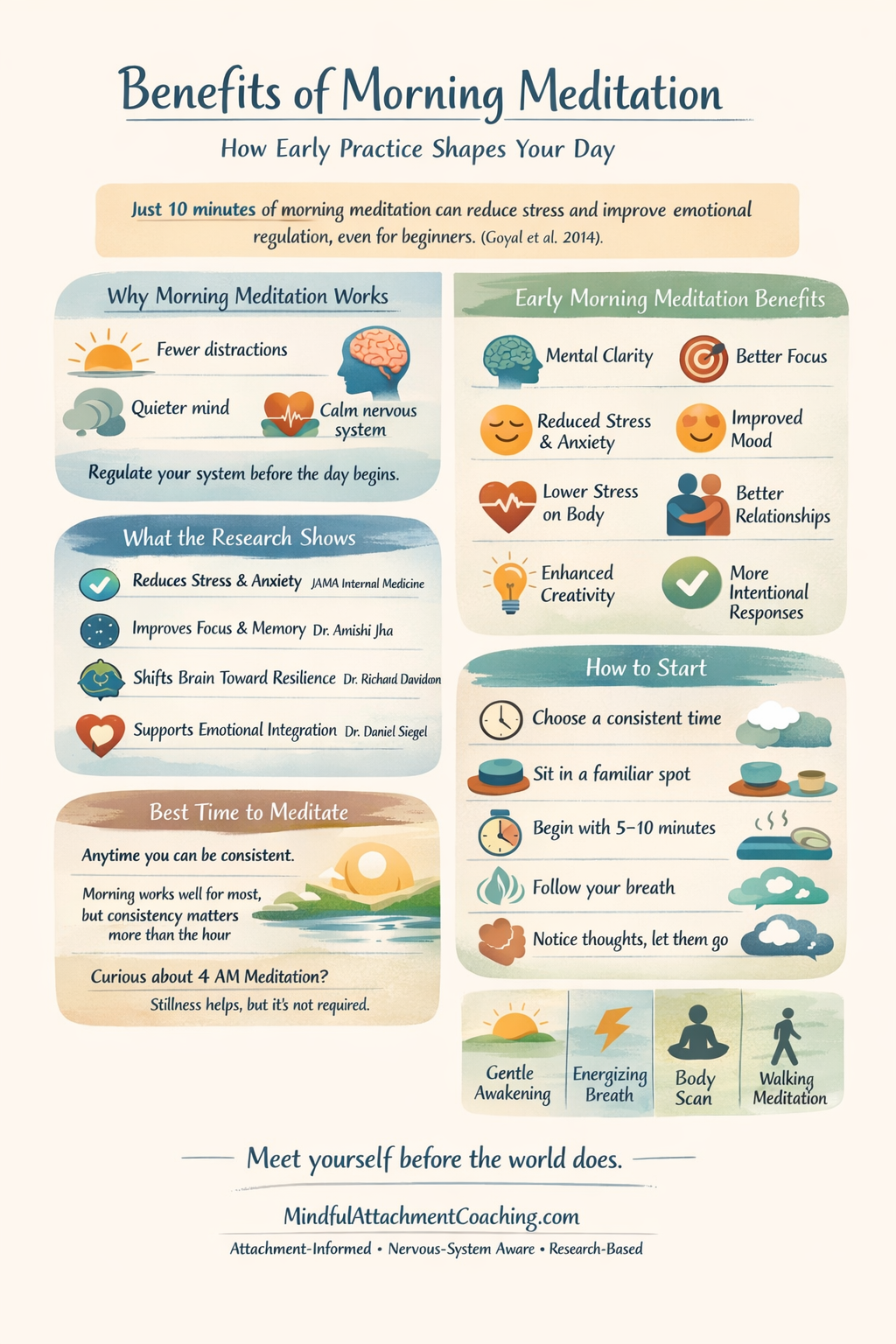
Illustration of the benefits of morning meditation, highlighting how even 5–10 minutes of early practice can support emotional regulation, reduce stress and anxiety, improve focus and mood, and promote nervous system calm. The visual summarizes research-backed benefits, explains why morning meditation is effective due to fewer distractions and a quieter mind, and offers simple steps for getting started. Designed from an attachment-informed, nervous-system-aware perspective, the image emphasizes consistency over perfection and frames morning meditation as a way to “meet yourself before the world does.”
Frequently Asked Questions
What are the benefits of morning meditation?
Morning meditation reduces stress, improves emotional regulation, boosts mental clarity, and enhances overall resilience, even with just 10 minutes daily.
How does morning meditation improve focus and productivity?
Meditating in the morning trains the mind to stay present, reduces mental distractions, and supports emotional steadiness, improving focus and productivity throughout the day.
Can short daily meditation sessions really change the brain?
Yes, research shows that brief daily meditation can reshape brain activity, increasing regions linked to emotional resilience, positive mood, and stress regulation.
Does morning meditation reduce anxiety and stress?
Yes, morning mindfulness meditation significantly lowers stress, anxiety, and emotional reactivity by balancing the nervous system and promoting calm before daily challenges.
How soon will I notice the benefits of morning meditation?
Many people notice immediate improvements in calmness and mental clarity after the first few sessions, while consistent daily practice maximizes long-term emotional regulation and resilience.
References
Davidson, R. J., Kabat-Zinn, J., Schumacher, J., Rosenkranz, M., Muller, D., Santorelli, S. F., Urbanowski, F., Harrington, A., Bonus, K., & Sheridan, J. F. (2003). Alterations in brain and immune function produced by mindfulness meditation. Psychosomatic Medicine, 65(4), 564–570.
Goyal, M., Singh, S., Sibinga, E. M. S., Gould, N. F., Rowland-Seymour, A., Sharma, R., Berger, Z., Sleicher, D., Maron, D. D., Shihab, H. M., Ranasinghe, P. D., Linn, S., Saha, S., Bass, E. B., & Haythornthwaite, J. A. (2014). Meditation programs for psychological stress and well-being: A systematic review and meta-analysis. JAMA Internal Medicine, 174(3), 357–368.
Jha, A. P., Stanley, E. A., Kiyonaga, A., Wong, L., & Gelfand, L. (2010). Examining the protective effects of mindfulness training on working memory capacity and affective experience. Emotion, 10(1), 54–64.
Khoury, B., Sharma, M., Rush, S. E., & Fournier, C. (2015). Mindfulness-based stress reduction for healthy individuals: A meta-analysis. Journal of Psychosomatic Research, 78(6), 519–528.
Kabat-Zinn, J. (1994). Wherever you go, there you are: Mindfulness meditation in everyday life. Hyperion.
Siegel, D. J. (2010). The mindful therapist: A clinician’s guide to mindsight and neural integration. W. W. Norton & Company.
Young, S. (2016). The science of enlightenment: How meditation works. Sounds True.
